Age estimation
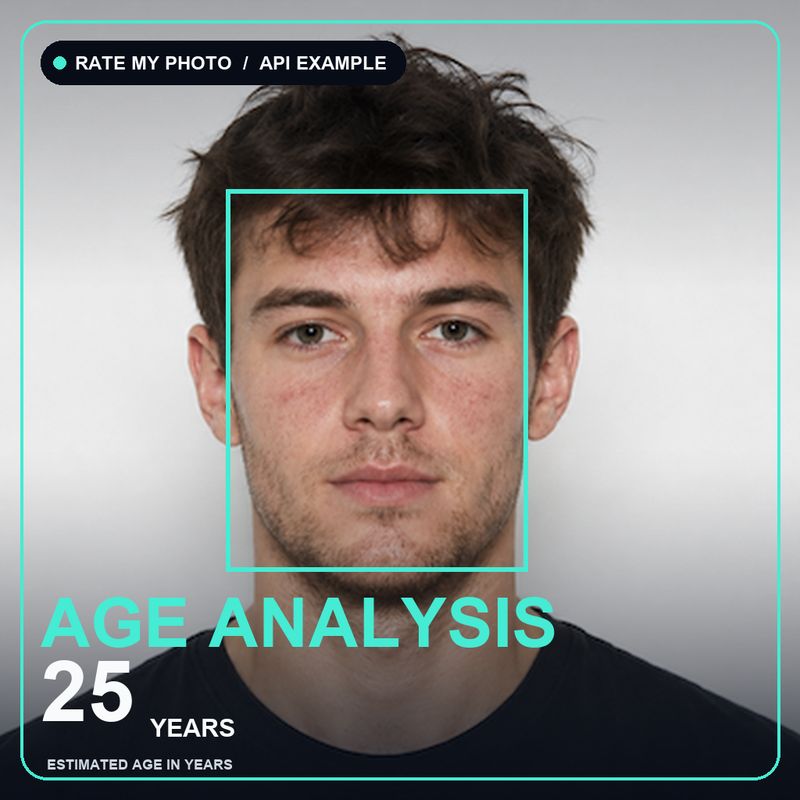
Estimate the apparent age of the primary face and optionally return its boundary box or a base64-encoded face crop.
age and boundary_boxAdd fast, accurate age estimation and detailed face geometry to your product through a clear JSON API, with competitive pricing tailored to your usage.
Use age estimation, face mesh analysis, or request both from one image and one combined response.
Estimate the apparent age of the primary face and optionally return its boundary box or a base64-encoded face crop.
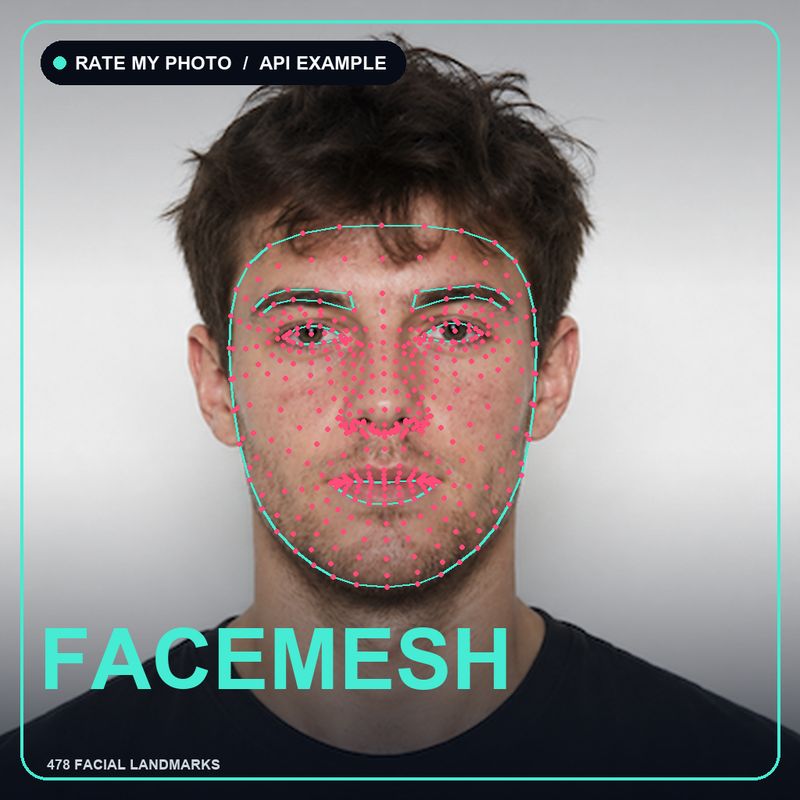
age and boundary_boxReturn 478 three-dimensional facial keypoints, with optional frontalized landmarks and head-pose measurements.
frontalized_keypoints and poseRun both models on the same preprocessed image and receive age data together with the requested face mesh outputs.
return_facemesh: true in the age requestThe public API wraps the same age-prediction capability used by our web experience and adds a consistent contract for product teams.
Send raw base64, a data URI, or a public HTTP(S) image URL in a JSON request.
Large images are resized once to a 1000 px maximum side, then shared across combined analysis.
Request only the boundary box, crop, landmarks, frontalized points, or pose data your workflow uses.
Versioned responses and stable error codes make validation and failure handling easier to implement.
A compact request flow keeps integration straightforward.
Send either face_image or face_image_url—never both in the same request.
Use boolean parameters to keep the response focused on the age or face data your application needs.
Read api_version with the requested result, or a structured error code and message.
Images can be up to 15 MB, with no side over 4500 px. Images above 1000 px on their longest side are downscaled with their aspect ratio preserved.
Contact us to discuss current pricing, expected request volume, and the response data your product needs.
Short answers to the most common integration questions.
NO_FACE_DETECTED error.POST /age with return_facemesh set to true. The age and face mesh models then use the same preprocessed image.